
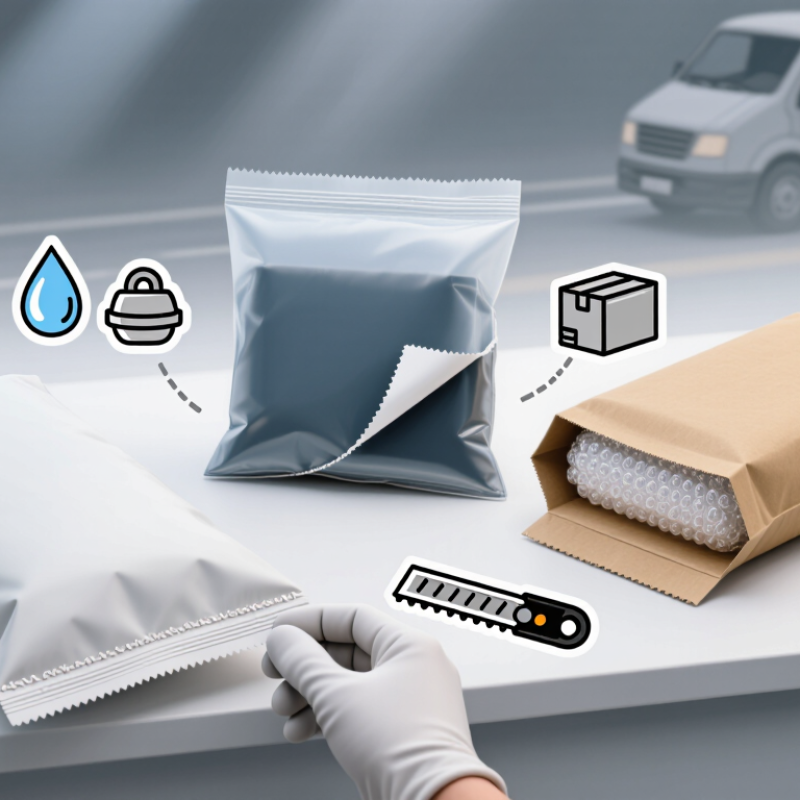
For 2026 long-transit selection, durable Packaging Bags need more than thick film. The seam must resist pulling, vibration, temperature changes, and repeated handling. ASTM F88 provides a practical method for measuring seal strength in flexible materials. It tests the force required to separate a defined seal width. This creates comparable data for bags, liners, and closure designs. Small details matter. Film thickness alone does not prove durability.
A reliable test plan starts with representative samples from normal production. Cut strips across the seal, keep the width consistent, and condition specimens before testing. Record jaw temperature, dwell time, pressure, seal width, and pulling speed. These settings can change results significantly. Watch the failure mode, not only peak force. A clean peel differs from film tearing or seal delamination. Use enough specimens to reveal variation between the bag center and corners.
Closures deserve equal scrutiny. A zipper, adhesive flap, or folded lip may carry different stresses than the main seam. For non-heat closures, add opening-force and cycle testing rather than forcing ASTM F88 to fit. Test samples after simulated compression, drops, and temperature exposure. Our early checks focused too heavily on average strength. That was a mistake. One weak corner can compromise a full shipment. ASTM F88 cannot reproduce every transit hazard, so pair it with leak, burst, and handling evaluations. Document numbers and visible failures before approving the design.