Choosing a partner like Protective Packaging Corp isn't just about picking a supplier; it’s about making a decision that really impacts your product’s safety, your customers' trust, your costs, and even waste management. A dependable supplier will understand things like how fragile your products are, the routes they’ll travel, storage conditions, and the handling risks involved. The best solution might be molded pulp, foam, corrugated inserts, air cushions—you name it—or sometimes a smart combo of these. It’s not usually one-size-fits-all, and a good provider will help figure out what works best.
As packaging guru and author Dr. Susan Selke once said, “Packaging is a system, not just a container.” That really hits home when you’re comparing different Protective Packaging Corp providers. Top-notch suppliers look at the whole journey—right from manufacturing all the way to your customer’s doorstep. They ask the nitty-gritty questions about vibrations, compression, moisture, temperature, and how many times the package might get handled. Plus, they explain test results in plain language—no confusing jargon—to build your confidence.
Pay attention to the details—that’s often where competence shows. Check if the material thickness is consistent, if die-cuts are clean, closures are secure, and if the packaging fits well without too much movement. Don’t be shy about asking for samples. Run realistic tests—drop them, stack them—see how they hold up. Sometimes a supplier promises top protection, but a quick real-world test can reveal weak spots like corners that might break or tricky assembly issues. Those little flaws can make a big difference, and it’s worth spotting them early because, hey, mistakes happen.
Here are seven tips to help you evaluate materials, customization options, testing procedures, sustainability efforts, production capacity, customer service, and overall costs. Don’t just go with the cheapest quote, though—that can backfire. A cheaper insert might save you money upfront but could lead to more breaks, returns, extra labor, and unhappy customers down the line. Honestly, the best decisions come from comparing options carefully and asking honest questions. Keep in mind, no packaging plan is ever perfect—products evolve, shipping routes change, assumptions get outdated. So, it’s smart to revisit your choices regularly before locking yourself into a long-term relationship with a supplier like Protective Packaging Corp.

Understanding Protective Packaging Corp and Its Core Services
Understanding a Protective Packaging Corp starts with its core services, not its catalog. A competent provider assesses product fragility, drop height, vibration, moisture, and stacking pressure. It may supply foam, molded fiber, corrugated inserts, edge guards, blocking, bracing, and custom-fit packs. The right design holds a ceramic part firmly without crushing its corners. Fit matters. I have learned that a thicker pad can still fail when empty space lets the product move.
Industry data makes material choices harder. UNEP’s 2023 Turning off the Tap report states that packaging represents about 36% of global plastic production. The OECD’s Global Plastics Outlook records 353 million tonnes of plastic waste in 2019, roughly double 2000 levels. These figures support lighter, recyclable, or reusable options, but sustainability claims need evidence. Ask for recycled-content percentages, recovery guidance, and documented performance. A paper insert is not automatically better if it collapses during a humid shipment.
When comparing suppliers, request a documented design process and test results. Standards such as ISTA 3A or ASTM D4169 can simulate drops, vibration, compression, and handling cycles. Review sample approval, lead times, tooling costs, quality checks, and replacement support. A reliable Protective Packaging Corp should explain where its design assumptions might fail. That honesty is useful. Pilot a small shipment before changing every carton. Measure damage rates, packing time, material weight, and customer complaints. The cheapest unit price can hide labor and returns.
Identifying the Packaging Risks Your Products Face
7 Tips for Choosing Protective Packaging Corp
Identifying the Packaging Risks Your Products Face
Packaging decisions should begin with the product’s actual journey, not a standard catalogue. Map every handoff, from filling and storage to delivery and unpacking. A ceramic item may face corner impacts, while electronics can suffer from vibration and static discharge. Paper Protective Packaging can cushion light products, but it may need reinforcement around sharp edges.
Inspect the product’s weak points before selecting materials. Look for thin walls, loose components, polished surfaces, and exposed seams. Then examine warehouse conditions. Heavy stacking can crush lower cartons. Moisture can weaken paper fibers. Temperature changes may create condensation inside sealed packaging. Small gaps often become serious movement during transport.
In practical packaging trials, I have learned that drop tests alone reveal only part of the risk. Test vibration, compression, abrasion, and repeated handling as well. Record the package weight, product position, and damage location after each test. The checklist was incomplete. My early assessments sometimes ignored unpacking damage, especially when tools were used near delicate surfaces. That mistake changed how I review opening instructions and internal restraints. Choose protection based on measured failure points, not attractive appearance or habit. A short trial with realistic shipping conditions can expose risks that a clean showroom test will miss.
Comparing Materials, Designs, and Protection Levels
7 Tips for Choosing Protective Packaging Corp
Choosing protective packaging starts with the material, not the appearance. Corrugated board suits lightweight products and recycles easily. Foam offers better cushioning but may increase waste and storage volume. Molded pulp can protect shaped items, although its corners sometimes crush under moisture. Compare weight, compression strength, moisture resistance, and disposal requirements before deciding.
Design matters just as much. A snug insert limits movement inside the carton. Too much empty space invites impact damage. Too little space transfers pressure directly to the product. Check closures, seams, handles, and stacking surfaces. Fit matters. In packing trials, a simple paper spacer sometimes outperformed a thicker cushion because it stopped sliding. That result was easy to overlook. Measure twice.
Protection levels should match the actual shipping environment. A fragile glass component may need shock absorption, vibration control, and moisture barriers. A durable metal part may need only abrasion protection and stable positioning. Use drop, compression, vibration, and humidity tests with realistic weights. Record damage, temperature, orientation, and failure points. One test is not enough. Ask whether the package works after repeated handling, not only after a perfect trial. I have seen teams select the strongest material, then discover that workers cannot close it consistently. Usability is protection too. Review supplier specifications, inspect samples, and revise the design when evidence disagrees with assumptions.
Reviewing Production Capacity, Delivery, and Supply Reliability
7 Tips for Choosing Protective Packaging Corp
Production capacity should be measured, not assumed. Ask for current monthly output, spare capacity, and peak-season limits. A reliable supplier can explain its equipment, staffing, and quality controls clearly. Request recent production records or a controlled sample run. This reveals whether the Protective Pack performs consistently, not just beautifully in a sales sample. Check material thickness, seal strength, and dimensional accuracy. Small variations can damage products during stacking or transport. Capacity figures may change quickly.
Delivery performance deserves equal attention. Review standard lead times, rush-order procedures, and shipment tracking methods. Ask how delays are communicated and who approves recovery plans. A useful supplier should provide realistic dates, not optimistic guesses. Test the process with a modest order before committing to a large contract. Measure order confirmation, production completion, dispatch, and arrival times. Keep these records for comparison. It feels simple, but many teams skip it.
Supply reliability depends on more than finished inventory. Confirm the availability of films, foams, cartons, adhesives, and other essential inputs. Ask whether critical materials have qualified alternatives. A documented backup plan reduces disruption when a source faces shortages. Still, backup claims require evidence. Review inspection reports, corrective-action records, and continuity procedures. Do not ignore communication quality. A supplier that answers difficult questions directly is easier to manage during pressure. I would also revisit these checks every quarter, because a strong performance last year proves very little today.
7 Tips for Choosing Protective Packaging Corp - Reviewing Production Capacity, Delivery, and Supply Reliability
| Tip | Evaluation Dimension | Practical Benchmark | Data to Review | Recommended Assessment |
| 1 | Production Capacity | Documented monthly capacity should exceed forecast demand by at least 15% to 25%. | Rated output by product type, operating hours, number of production lines, and current utilization. | Compare normal and peak demand with available capacity. Avoid suppliers operating consistently above 85% utilization. |
| 2 | Capacity Flexibility | A qualified supplier should be able to add approximately 10% to 20% short-term volume when resources are available. | Overtime policy, backup equipment, cross-trained personnel, and documented surge procedures. | Confirm whether additional volume can be accepted without reducing quality or extending standard lead times. |
| 3 | Standard Lead Time | Common protective packaging orders are often planned within a 2- to 6-week production window, depending on material and customization. | Historical order-to-ship records, production schedule, tooling requirements, and approval timelines. | Request lead-time data from at least the previous 6 to 12 months and separate standard orders from rush orders. |
| 4 | On-Time Delivery | A consistent on-time delivery rate of 95% or higher is a useful purchasing target. | Monthly shipment records, promised dates, actual ship dates, delay reasons, and corrective-action reports. | Calculate on-time performance using the original confirmed date rather than a revised date. |
| 5 | Order Fulfillment Accuracy | Order completeness and specification accuracy should generally reach 98% or higher. | Quantity variance, dimensional conformity, labeling accuracy, damage claims, and customer return records. | Review both delivery timing and shipment quality; an on-time shipment is not successful if it cannot be used. |
| 6 | Material Supply Reliability | Critical materials should have at least two qualified sources or a documented continuity plan. | Supplier qualification records, material lead times, safety-stock policy, inventory coverage, and disruption history. | Ask how many weeks of critical material inventory are maintained and how quickly an alternate source can be approved. |
| 7 | Communication and Recovery | Delivery risks should be communicated as soon as identified, with a corrective plan and responsible owner. | Escalation contacts, forecast-update process, incident response time, recovery performance, and review-meeting records. | Use a written service-level agreement covering reporting frequency, notification deadlines, recovery actions, and performance reviews. |
| Benchmark values are practical procurement guidelines rather than company-specific claims. Validate them against product complexity, order volume, material availability, shipping distance, and contractual requirements. |
Assessing Costs, Sustainability, and Long-Term Value
7 Tips for Choosing Protective Packaging Corp
Tip 1: Calculate the complete cost, not only the purchase price. Include assembly time, storage space, damage claims, returns, and disposal fees. A cheaper carton can become expensive after one rough delivery. Tip 2: Request samples and test them with your actual products. Drop tests, vibration checks, and compression trials reveal weaknesses that brochures often miss. I once approved a package after a simple bench test, but warehouse stacking exposed its poor side strength.
Tip 3: Compare material efficiency carefully. Recycled content matters, but excessive material can cancel environmental gains. Tip 4: Ask for clear sustainability evidence, including recycled percentages, certifications, local sourcing, and disposal guidance. Vague environmental language deserves questions. Tip 5: Measure packaging weight and volume against transport emissions. A lighter design may reduce freight costs, although it must still protect fragile edges and surfaces.
Tip 6: Examine long-term reliability. Review production capacity, quality controls, lead times, and response procedures for damaged shipments. Tip 7: Consider whether the supplier can redesign packaging as your products change. Useful partners share test data and explain limitations honestly. That honesty is valuable. A supplier promising zero damage sounds impressive, but dependable decisions need documented performance, realistic tolerances, and periodic reviews. Ask for references from similar shipping conditions, then verify those claims with evidence.
7 Tips for Choosing Protective Packaging Corp — Assessing Costs, Sustainability, and Long-Term Value
Material recycling rates provide a useful sustainability benchmark when comparing protective packaging options. Cost, product protection, reuse potential, and disposal access should also be evaluated.
How to use this comparison
- Compare total cost, including materials, labor, storage, shipping, and disposal.
- Match cushioning performance to the product’s weight, fragility, and shipping conditions.
- Check recycled content, recyclability, and the availability of local recovery systems.
- Assess whether the packaging can be reused across multiple shipments.
- Measure damage-reduction value, since product replacement can outweigh packaging savings.
- Consider space efficiency, handling time, and transportation emissions.
- Review supplier consistency, compliance documentation, and long-term availability.
Source: U.S. Environmental Protection Agency, 2018 Municipal Solid Waste material recycling data. Rates are shown as a general sustainability reference and may vary by region and packaging format.
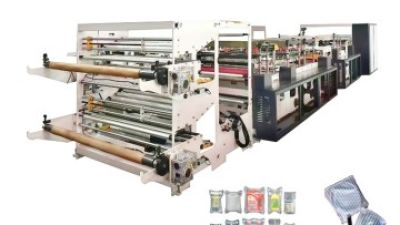
Automatic Air Column Film Machine: A Smart, Efficient Packaging Solution from China Suppliers and Factory Manufacturers
The Automatic Air Column Film Machine is a smart and efficient packaging solution for businesses that need reliable protective materials at scale. Supplied by experienced China suppliers and factory manufacturers, this fully automated system produces strong, air-filled films that cushion products, fill empty spaces, and help reduce damage during transportation. Compared with a semi-automatic Air Column Machine, it offers higher production efficiency and more consistent operation, making it suitable for e-commerce, logistics, electronics, household goods, and other industries.
Designed for streamlined factory workflows, the machine can automatically feed packaging material, eject completed film rolls, and load new rolls with minimal manual assistance. This reduces labor requirements while supporting continuous production and stable output. Operators can adjust key settings according to different product sizes and packaging requirements, helping manufacturers create protective air column films with greater precision. With dependable performance, efficient material handling, and scalable production capacity, this equipment supports companies seeking to improve packaging operations through advanced automation.
Conclusion
Choosing the right Protective Packaging Corp requires more than comparing prices. Start by understanding the company’s core services and determining whether its solutions address the specific risks your products face, such as impact, moisture, vibration, temperature changes, or handling damage. Compare available materials, structural designs, and protection levels to ensure the packaging is suitable for your products and shipping conditions.
You should also evaluate customization options, testing procedures, quality standards, production capacity, delivery performance, and supply reliability. A dependable provider should be able to maintain consistent quality while adapting to changing order volumes and product requirements. Finally, review total costs, material efficiency, sustainability practices, and long-term value rather than focusing only on the initial price. The best choice will balance strong protection, practical design, reliable service, environmental responsibility, and overall cost-effectiveness.