Inquiry
Form loading...
0%

Picking out a poly mailer making machine in 2026 isn’t just about chasing after the fastest specs you see on a brochure. Honestly, it’s more about making sure the machine can handle the actual work you’re doing—matching your output, bag sizes, film types, and sealing quality. A machine built for steady ecommerce orders might not be the best fit if you’re doing lots of custom runs now and then. And don’t forget to check out the sample bags: do their seams stay nice and flat? Does the cutter give you clean edges? Those small details really matter.

Here’s a little expert advice — packaging engineer Daniel Chen gives a good rule of thumb. He suggests: “Pick a machine based on the bags you need to make every day, then test how well it performs with your own materials.” That’s smart, but keep in mind, real production can still throw you some surprises. It’s a good idea to ask suppliers for a live trial using your film, specific dimensions, and typical order patterns. Pay attention to how long changeovers take, how easy it is for operators to access different parts, the amount of waste during setup, and how clear the maintenance instructions are. Don’t just consider the purchase price—look at the total operating needs.

And if you’re also making Paper Mailer Bags, double-check that the equipment and tooling are compatible with those materials. Don’t assume one setup works for all formats—that could lead to problems down the line. This guide highlights the key questions you should ask before making a decision. Remember, a careful choice can help avoid unnecessary downtime, but nothing beats actually testing the machine with your own materials first.
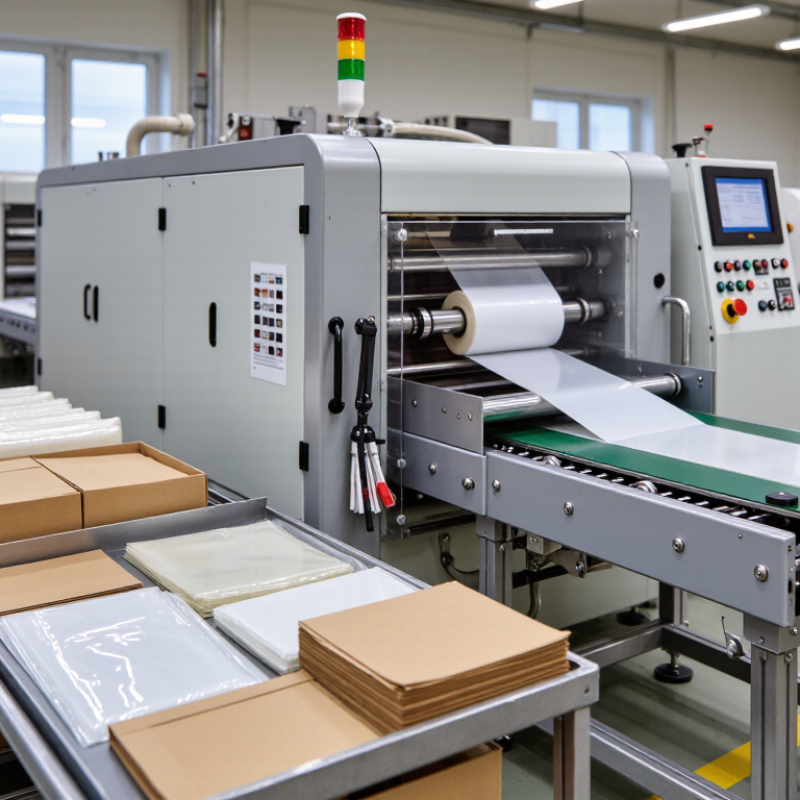
How to Choose a Poly Mailer Making Machine in 2026

Define Your Poly Mailer Production Needs and Output Targets

Before comparing machine specifications, define what the line must make each day. List bag width, length, flap style, film thickness, colors, and sealing requirements. Include the share of each size in your order mix. A machine rated at 120 bags per minute may not sustain that rate across frequent size changes. Ask for output data using your actual film and bag dimensions, not just a best-case figure. Small details matter.

Set a practical target based on sellable output, not theoretical speed. Estimate hourly demand, shifts, maintenance, setup time, and reject rate. A 25,000-bag daily requirement needs more than a speed calculation. Allow time for roll changes and seal checks. Track acceptable bags per hour during a representative production run. Your first forecast may be wrong. Review it after collecting several weeks of order data.

Consider future product variation too. If you plan to make Padded Mailer Bags, verify the required layered material and sealing method. This may call for separate equipment or tooling. It is easy to overbuy capacity, while underestimating peak-season demand can create delays. Leave some room for growth, but base your target on documented orders. Record assumptions about seasonal peaks and downtime so you can revisit them later.

Compare Poly Mailer Machine Types and Forming Methods

Poly mailer machines generally use roll-fed film, but their feeding and forming systems differ. Intermittent-feed models stop the film for each seal and cut. They suit varied bag lengths and smaller production runs. Continuous-motion machines form and seal film while it moves, supporting faster output when dimensions stay consistent.

Speed is not everything.

Forming usually includes folding the film, making a bottom or side seal, and cutting each mailer. Some setups create a flap and apply adhesive tape in-line; others need a separate operation. Compare single-lane and multi-lane designs against your actual order mix. Multiple lanes can raise output, but they may require more floor space and tighter film alignment. A small misalignment can leave uneven edges or weak seals.

Ask for a sample run using your film thickness and target mailer size. Check seal strength, cut consistency, flap dimensions, and tape placement—not just bags per minute. Also review changeover time, scrap rates, and the operator adjustments needed between sizes. A machine that looks efficient in a demonstration may behave differently with your film. That trade-off matters. Record results across several runs before choosing a forming method.

Assess Film Compatibility, Bag Sizes, and Machine Specifications

Film compatibility is the first practical check when choosing a poly mailer making machine. Confirm the film type, thickness, roll width, and sealing method the machine can handle. A thin recycled film may stretch or wrinkle under settings designed for thicker material. Ask for the recommended temperature and tension range, then test your own rolls. Small tests matter.

Bag sizes affect more than the machine’s maximum width. Check the minimum and maximum bag length, seal allowance, and how quickly operators can change settings between sizes. Measure twice. A machine that runs one popular size well may still waste film when producing shorter bags. Ask a Padded Mailer Manufacturer or equipment supplier for sample bags made with your intended film and dimensions.

Compare specifications that shape daily output: rated speed, actual speed with your film, sealing consistency, control interface, and changeover time. Also verify power requirements, floor space, and access for cleaning the seal bar. Request a trial using several roll batches; film can vary slightly, and the first settings may not hold. That is worth admitting. A clear test record helps operators repeat good results and spot drift before it creates a stack of uneven seals.

Evaluate Automation, Quality Control, and Safety Features

Choosing a poly mailer making machine in 2026 means judging how well its automation handles real production changes. Look for clear controls for film tension, seal temperature, and bag length, plus alarms operators can understand quickly. The International Federation of Robotics reported 4,281,585 industrial robots in operation worldwide in 2023 in its World Robotics 2024 report. That figure reflects wider factory automation, not mailer-machine performance. Ask suppliers to demonstrate changeovers and fault recovery on film similar to yours. Small differences matter.

Quality controls should catch defects before cartons fill up. Consider sensors that monitor film tracking and sealing conditions, and vision inspection for print alignment or visible seal flaws. Ask whether the machine records rejects and process settings by production run. Review sample bags after startup and during extended runs; one clean demonstration is not enough. No dashboard catches every weak seal.

Safety deserves the same scrutiny as speed. Check for interlocked guards, accessible emergency stops, and safe procedures for clearing jams and changing rolls. The U.S. Bureau of Labor Statistics reported a 2.8 total recordable injury and illness rate per 100 full-time workers in manufacturing for 2023. This industry-wide rate does not measure one machine’s risk, but it underscores why operator access and maintenance tasks need careful review. A fast line is less useful if routine adjustments require reaching near moving parts.

Calculate Total Ownership Costs and Expected Production Efficiency

Choosing a poly mailer machine by purchase price alone can hide expensive surprises. Compare total ownership cost over five years: equipment, installation, film waste, labor, electricity, maintenance, and downtime. Track saleable bags per hour, not the fastest speed shown on a specification sheet. A machine rated at 100 bags per minute may deliver less after size changes, sealing checks, and roll replacement.

Use measured figures where possible. The U.S. Energy Information Administration’s 2023 electricity data reports an average industrial price of 8.14 cents per kilowatt-hour. At that rate, a machine drawing 2.5 kW for 4,000 hours yearly uses about $814 in electricity. Actual consumption varies with heaters, idle time, and local tariffs. The Bureau of Labor Statistics’ May 2023 wage tables list packaging and filling machine operators’ median annual pay at about $37,500 nationally; local wages and staffing needs may differ. Include training and coverage for breaks.

Ask for a production trial using your actual film and bag sizes. Record good bags, rejected seals, changeover minutes, and unplanned stops across a full shift. Then compare the results with the supplier’s stated output. A Packaging Machine that runs steadily may beat a faster unit with frequent adjustment. I’d still leave a buffer: film curl and operator learning can quietly spoil the spreadsheet. The estimate deserves another look.

How to Choose a Poly Mailer Making Machine in 2026

Compare modeled five-year total ownership cost with estimated annual production output.

The chart compares three illustrative capacity tiers. Five-year ownership cost includes installed purchase cost, maintenance, electricity, and one operator’s labor. Annual output assumes 8 hours per day, 250 days per year, and 70% productive utilization.

Planning estimates, not vendor quotes or industry benchmarks. Example assumptions: loaded labor at $25/hour, electricity at $0.12/kWh, and machine speeds of 60, 100, and 150 bags per minute. Actual costs and output depend on machine configuration, material, product size, staffing, and operating conditions.

Verify Supplier Support, Compliance, and Machine Performance Before Purchase

Choosing a poly mailer making machine in 2026 takes more than comparing advertised speeds. Ask the supplier to run your actual film through the machine. Watch the sealing edge, cutting accuracy, and finished bag dimensions. A few sample bags can reveal wrinkles or weak seals that a brochure will not show. Request written output figures for your material and bag size, not just a maximum speed.

Support matters after installation. Confirm who handles setup, operator training, and troubleshooting, and how quickly technical help is usually available. Ask whether spare blades, heaters, and sensors can be sourced consistently. Check that manuals and safety instructions match the delivered configuration. Compliance requirements vary by market and facility, so have the supplier identify relevant documentation and verify it with your own qualified reviewer. Do not rely on a verbal assurance.

Test performance under realistic production conditions. Run the machine long enough to expose feeding issues, heat fluctuations, or frequent adjustments. Record output, scrap, and downtime. Compare those results with your production needs. A Foam Packaging Machine may use different processes, but the same habit applies: inspect real operation, not just sales claims. I would also ask for an acceptance test in writing. It may feel overly cautious, but assumptions can become expensive.

How to Choose a Poly Mailer Making Machine in 2026 — Verify Supplier Support, Compliance, and Machine Performance Before Purchase

Evaluation area What to check Evidence to request Practical acceptance check Why it matters
Application and film range Confirm the machine’s supported film type, web width, thickness range, bag dimensions, sealing method, and any printing or perforation requirements. Written technical specification identifying the compatible materials and operating limits. Run your intended film and representative bag sizes during a witnessed test; record the material grade, thickness, width, and settings used. Performance depends on the specific film, bag format, tooling, and process settings. A general machine description is not enough to confirm suitability.
Output and product quality Assess production speed alongside seal strength, dimensions, cut quality, registration, scrap, and changeover requirements. Factory acceptance test (FAT) plan and results using agreed product specifications and operating conditions. Put measurable limits for output and product quality in the purchase agreement. Record sustained results over an agreed test period, not only a short peak-speed run. There is no single meaningful speed figure for every poly mailer machine; bag size, film, operator, and optional features can affect throughput.
Factory and site acceptance Check whether testing covers machine functions, safety interlocks, alarms, production settings, and handover at your facility. Documented FAT and site acceptance test (SAT) procedures, test records, and a list of outstanding items. Agree in advance who supplies film, tooling, utilities, and operators, and how deficiencies will be corrected before final acceptance. Clear acceptance criteria reduce disputes about whether the delivered line meets the agreed specification.
Supplier training and service Verify installation support, operator and maintenance training, service hours, response process, and availability of remote troubleshooting. Written service scope, training agenda, escalation contacts, warranty terms, and examples of maintenance documentation. Confirm the language of manuals and training, who pays for travel, and the expected response process for production-stopping issues. Support arrangements affect installation, safe operation, troubleshooting, and recovery from downtime.
Spare parts and maintenance Identify wear parts, recommended maintenance intervals, and parts with long replacement lead times. Illustrated parts list, maintenance schedule, recommended startup spares, and quoted delivery terms. Ask the supplier to identify critical spares and verify part numbers, quantities, and replenishment arrangements before ordering. Planning for consumable and critical components can help avoid extended interruptions.
Safety and risk assessment Review guarding, emergency stops, access points, electrical hazards, and risks associated with moving parts and hot sealing areas. Machine-specific risk assessment, operating instructions, safety-device information, and applicable conformity documentation. Have qualified personnel assess the machine against the regulations and workplace requirements applicable at the installation site. Safety requirements depend on the machine configuration, destination market, and how the equipment will be installed and used.
Regulatory compliance Determine which legal requirements apply in the destination country and verify the exact machine configuration covered by the documents. Applicable declarations, technical documentation, electrical documentation, and supporting test or assessment records as required by law. For EU-bound equipment purchased in 2026, confirm the applicable machinery rules for the placing-on-the-market date. The EU Machinery Regulation (EU) 2023/1230 generally applies from 20 January 2027; the transition and applicable rules should be checked for the specific case. A label or generic certificate alone may not demonstrate that the delivered configuration meets all applicable legal requirements.
Electrical and control system Check supply voltage and frequency, control components, wiring diagrams, safety functions, and compatibility with site electrical systems. Electrical drawings, component list, required utility specifications, and relevant conformity or test documentation. Confirm the machine’s rated electrical supply and connection requirements with your site electrician before shipment. Installation conditions and electrical requirements must match the machine and the local rules at the site.
Total cost and contract terms Compare the complete delivered scope, including tooling, installation, training, shipping, duties, spares, and optional equipment. Itemized quotation, delivery and installation scope, warranty conditions, payment milestones, and acceptance terms. Ensure the quotation and contract describe the same machine configuration, deliverables, performance test, and remedies for unmet agreed requirements. A comparable total-cost view is more useful than comparing machine prices alone.

Buyer note: Treat performance figures and compliance claims as configuration- and market-specific. Put the intended film, product dimensions, test conditions, acceptance limits, documentation, and support commitments in writing before purchase.

Smarter Protective Packaging with an Automatic Air Column Film Machine

Smarter Protective Packaging begins with materials that adapt to the shape of each product. An Automatic Air Column Film Machine produces air-filled cushioning film designed to absorb impact and fill empty spaces inside shipping cartons. The connected air columns help keep goods stable in transit while offering a lightweight alternative to bulky protective materials. This makes the film a practical option for e-commerce fulfillment and other operations that need dependable, scalable packaging.

Designed for continuous production, the machine automates key steps such as feeding material, ejecting finished film rolls, and loading new rolls. By reducing routine manual handling, it can help packaging teams maintain a steady workflow and increase output as order volumes change. Its automated operation also supports more consistent film production, helping businesses prepare protective packaging when needed and improve the efficiency of their shipping process.

FAQS

What information should I gather before choosing a poly mailer machine?

List bag widths, lengths, flap styles, film thicknesses, colors, and sealing needs. Include how often each size appears in your orders.

How should I estimate daily production capacity?

Calculate sellable bags per hour, not advertised maximum speed. Include roll changes, setup, maintenance, and rejected bags. Real output can be lower.

Should I choose an intermittent-feed or continuous-motion machine?

Intermittent-feed machines can suit varied lengths and smaller runs. Continuous-motion models may be faster when sizes stay consistent. Test both with your film.

What should I inspect during a sample production run?

Check seal strength, cut edges, flap dimensions, and tape placement. Look closely for wrinkles. Record scrap and changeover time too.

Can multiple lanes increase production?

They can raise output, but need more floor space and careful film alignment. Even a small shift may cause uneven edges or weak seals.

How can I confirm a machine will handle my actual materials?

Ask for a run using your film thickness and target bag size. Request written output figures for that setup, not just maximum-speed claims.

What supplier support should I confirm before purchase?

Clarify installation, operator training, and troubleshooting response times. Check the availability of spare blades, heaters, and sensors. Manuals should match the delivered machine.

How should I verify performance before accepting the machine?

Run it under realistic conditions and record output, scrap, downtime, and adjustments. Ask for written acceptance criteria. I might be cautious, but assumptions can get expensive.

Conclusion

Choosing the right Poly mailer making machine in 2026 starts with a clear understanding of your production goals. Estimate the volume, bag sizes, and product mix you need to handle, then compare machine types and forming methods to find a suitable fit. Check that the equipment supports your intended film materials and thicknesses, and review its specifications, changeover requirements, and available size range.

Look beyond initial output claims when evaluating a machine. Consider automation, sealing consistency, inspection and quality-control features, and operator safety. Calculate the full cost of ownership, including energy use, maintenance, staffing, and potential downtime, alongside expected production efficiency. Before purchasing, confirm the supplier’s training and service support, request relevant compliance documentation, and verify performance through clear specifications or a production test. A careful comparison helps you select equipment that meets current needs while leaving room for future growth.

Amelia

Amelia

Amelia is a dedicated marketing professional at Hangjia Machinery, specializing in innovative packaging solutions for the rapidly expanding e-commerce sector. With a deep understanding of the industry's dynamics, she plays a pivotal role in communicating the advantages of the company’s offerings,......
Previous 7 Tips for Choosing Protective Packaging Corp