Picking a luxury packaging production line? That's not just an equipment decision. It's really a call about protecting your brand. Bain & Company and Altagamma put the global luxury market at around €1.48 trillion in 2024. And at that scale, every box, bottle, insert, and finishing detail starts to feel a lot more high-stakes.
So, according to Smithers’ The Future of Luxury Packaging to 2028, three big things are driving the luxury Packaging Market: premiumization, personalization, and sustainability. And those forces naturally shake up what production lines need to handle. A line has to run delicate papers, rigid boards, magnetic closures, embossing, foil stamping, andProtective Packaging—all without hurting the visual quality. Because even small defects? They can get expensive fast. You know, even a slightly crooked logo can chip away at all that hard work you put into building a brand. Pierre Pienaar, president of the World Packaging Organisation, has often called packaging “the silent salesman.” And honestly, that still works pretty well when you’re comparing production lines. Sure, speed matters—but being able to repeat the same precision over and over? That matters more. Automation can cut down on waste and make traceability better, no question. But if the settings aren’t tested properly, it can also crank out the same costly mistake again and again. Because no line is ever perfect.
When you're actually evaluating this stuff, don't just look at the headline specs. You'll want to dig into things like substrate flexibility, changeover time, inspection systems, energy use, operator training, and what after-sales support really looks like. And definitely test real materials—not just the samples the supplier sends over. A glossy coating can look great under showroom lights, but put it next to a retail window? It might not hold up at all. That's the kind of assumption worth putting to the test.
Honestly, the best investments tend to mix technical capability with quality controls you can actually measure. But data by itself? It can't replace real factory experience. Teams really ought to look at finished samples, go through maintenance records, and work out the total cost of ownership. Luxury packaging loves consistency—though a bit of thoughtful imperfection can still show you where the process needs work.
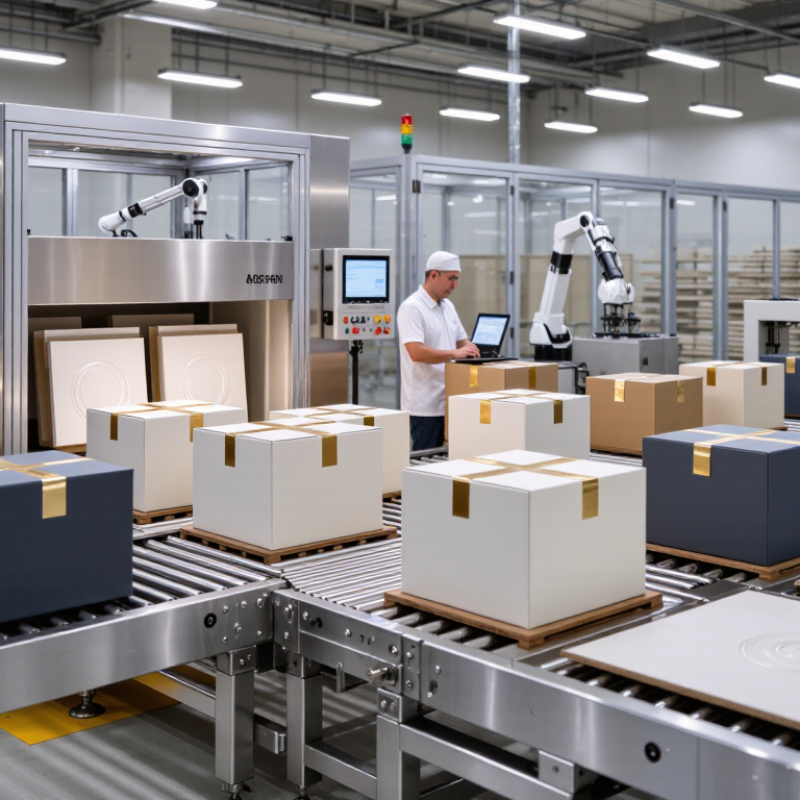
Defining luxury packaging goals starts with the product, not the machine. Decide what customers should feel when they lift the box. Is it weight, softness, precision, or quiet restraint? Record the required dimensions, opening force, closure style, and display position. Packaging Materialsmust support these decisions, from rigid board and molded inserts to textured paper and protective coatings. McKinsey’s packaging research found that 60–70% of consumers would pay more for Sustainable Packaging, but luxury buyers still expect flawless presentation. Sustainability cannot excuse weak protection.
Translate those goals into measurable production requirements. Specify board thickness, color tolerance, foil registration, embossing depth, glue strength, and acceptable surface marks. A suitable line should handle these tolerances consistently, not only during a factory demonstration. It should also support quick changeovers when product sizes or seasonal finishes change. The Smithers luxury packaging market analysis highlights premiumization and sustainability as important growth drivers, increasing pressure for efficient, adaptable production.
Inspect sample boxes under neutral light. Test them after transport, stacking, humidity exposure, and repeated opening. Small failures matter. A corner may crush, or a magnetic closure may weaken after fifty cycles. In production reviews, teams often overvalue speed and underestimate inspection time. I would challenge that assumption. A slower line with reliable quality control may protect the luxury goal better than a faster line producing costly rework.
Choosing a luxury packaging production line starts with the material, not the machine. Paperboard, rigid board, molded fiber, glass, and coated films behave differently during feeding and forming. A line designed for rigid cartons may damage delicate textured stock. I examine board thickness, grain direction, moisture response, and edge compression before approving equipment. Small details matter. Trial sheets should run through gluing, folding, and inspection stations under real factory conditions.
Finishes require equal attention. Foil stamping needs stable pressure and temperature control. Embossing needs accurate registration, especially on fine lettering. Soft-touch coatings can attract dust if curing is incomplete. Ask for measurable tolerances, curing data, and sample records, rather than attractive demonstrations. Test before scaling. A production line should also support quick changeovers, because luxury orders often involve several sizes and finishes. In my experience, rushed adjustments create more waste than slow, documented setup.
Structural design determines whether the line remains reliable. Magnetic closures, drawers, inserts, and layered walls add handling risks. Check alignment sensors, adhesive control, compression timing, and reject mechanisms. Manual inspection still has value. It catches wrinkles that cameras may miss. However, automation is not perfect. Some prototypes pass beautifully, then fail after humidity changes. Build a pilot batch, measure defects, and revise the structure before committing to full production.
Choosing a luxury packaging production line starts before machinery selection. Prepress controls the visual promise. Designers must lock dielines, trapping, color profiles, and finishing layers early. A calibrated proof can reveal a 1 mm registration error before plates or dies are made.
Smithers estimates the global packaging market could exceed US$1.2 trillion by 2028. That scale makes process integration more valuable than isolated speed. The line should connect printing, coating, die-cutting, folding, and inspection.
For Paper Packaging, moisture control matters. A warped board can damage foil alignment and produce uneven folds. Inline cameras should check color, barcode readability, edge quality, and missing embellishments. Small defects become expensive when every carton receives manual attention.
After cutting, folding and gluing require controlled pressure and accurate setup data. Magnetic fixtures, servo adjustment, and quick-change tooling can reduce changeover waste. PMMI’s packaging automation research repeatedly identifies labor shortages and downtime as major investment drivers. Still, automation is not automatically better. A poorly integrated robotic cell may slow final assembly. Operators need clear touchpoints, ergonomic benches, and traceable batch records. I would also test three production runs, not one. Materials behave differently after humidity changes. The ideal line is measurable, adaptable, and slightly conservative where quality is difficult to recover.
Comparing Equipment Capabilities, Automation, and Line Flexibility
Choosing a luxury packaging production line starts with the product, not the machine catalog. A rigid box, folded carton, and delicate paper wrap demand different forming pressure, tolerances, and surface protection. Review output samples under angled light. Small glue marks or uneven corners become obvious there. Equipment capability should match material thickness, box dimensions, foil detail, and required hourly volume. Ask for verified trial data, not optimistic estimates. Start with evidence. A line that performs well for one format may struggle with another.
Automation can reduce handling damage, setup errors, and repetitive labor. Sensors should check alignment, feeding, adhesive presence, and finished dimensions. However, automation is not automatically better. Complex controls can slow changeovers when operators lack training. Examine recipe storage, alarm clarity, maintenance access, and manual override functions. The best system supports people. It does not hide problems. Confirm guarding and applicable safety standards before installation. Keep spare-part access and service response in the evaluation, because downtime rarely appears in a sales brochure.
Line flexibility matters when seasonal colors, short runs, and custom sizes shape demand. Modular stations allow printing, laminating, die cutting, forming, inspection, or packing to expand gradually. Quick-change tooling is valuable when a new size arrives on Friday and production starts Monday. Packaging Solutions should leave room for testing, not only maximum speed. Measure changeover minutes, startup waste, and operator learning time. I would also question impressive automation claims. Is the flexibility real, or does every adjustment require a specialist? No line is perfect. A careful decision balances consistency, adaptability, safety, and the uncomfortable limits of the current team.
A luxury packaging line must prove more than visual perfection. It should control color, dimensions, bonding strength, surface finish, and material consistency. Inline cameras can detect scratches, dents, and misalignment. Spectrophotometers can verify color under controlled lighting. Each batch should carry a traceable production record. ISO 9001-based procedures help standardize inspections, but certification alone does not guarantee good output. Operators still need training and documented corrective actions.
Sustainability and Compliance
Sustainability and compliance require evidence at the line-design stage. The OECD’s Global Plastics Outlook reports that only 9% of global plastic waste is recycled. This makes material selection and recovery planning important. Eurostat reported 188.7 kilograms of packaging waste per person in the European Union in 2021. Choose recyclable structures where possible, reduce unnecessary layers, and measure production scrap. Also check recycled-content claims, chemical restrictions, worker safety, emissions, and waste-water controls. Requirements differ across markets. A supplier’s general compliance statement may be too vague. Ask for test reports, declarations, and current regulatory records.
Request a pilot run before purchase. Test the line with real paper, coatings, adhesives, and hardware. Record defect rates, energy use, and changeover time. Review supplier documentation with an independent compliance specialist. No line is perfect. A beautiful sample may still conceal unstable glue curing or excessive scrap. That uncomfortable gap deserves attention before installation.
How to Choose a Luxury Packaging Production Line?
Calculating Investment Costs, Operating Efficiency, and Production Capacity
A luxury packaging line should be judged beyond its purchase price. Calculate equipment, installation, tooling, training, utilities, spare parts, and maintenance. Include floor preparation and operator wages. These costs often surprise buyers.
Start with realistic production data. If the line produces 1,000 boxes per hour, plan around 700 to 800 usable units. Changeovers, inspections, material adjustments, and minor stoppages reduce output. Measure the full cycle, not only the machine’s advertised speed. Record waste from paper, board, adhesive, and Bubble Packaging materials. A small material loss becomes expensive at scale.
Efficiency needs practical testing. Run samples with actual board thickness, surface finishes, and folding requirements. Check alignment, glue strength, color consistency, and rejection rates. A line may appear fast but create rework at the final inspection table. That is a costly weakness.
Capacity should match confirmed orders, not optimistic forecasts. Extra automation can reduce labor, but it may increase technical dependency and repair costs. Review hourly output, changeover time, energy use, and maintenance access. A spreadsheet can still lie. Build a three-year cost model with low, expected, and peak production scenarios. Then question every assumption. Fancy equipment is not always efficient equipment.
| Production Line Configuration | Investment Cost | Operating Efficiency | Production Capacity | Estimated Payback Period | |||||||||
|---|---|---|---|---|---|---|---|---|---|---|---|---|---|
| Core Equipment (USD) | Installation & Commissioning (USD) | Facility Preparation (USD) | Total Initial Investment (USD) | Rated Speed (Units/hour) | Overall Equipment Effectiveness | Operating Hours per Day | Direct Labor per Shift | Annual Output (Units) | Annual Material Consumption (Tonnes) | Estimated Conversion Cost (USD/unit) | Annual Contribution Margin (USD) | ||
| Entry-Level Semi-Automatic Line | $185,000 | $18,500 | $35,000 | $238,500 | 1,200 | 62% | 8 | 10 | 1,487,616 | 446 | $0.42 | $95,208 | 30–36 months |
| Balanced Automated Line ★ Recommended | $420,000 | $42,000 | $60,000 | $522,000 | 2,400 | 72% | 8 | 7 | 3,456,000 | 1,037 | $0.31 | $414,720 | 15–18 months |
| High-Speed Automated Line | $780,000 | $78,000 | $95,000 | $953,000 | 4,000 | 78% | 16 | 8 | 9,984,000 | 2,995 | $0.24 | $1,497,600 | 8–12 months |
| Flexible Premium Line with Modular Finishing | $1,150,000 | $115,000 | $135,000 | $1,400,000 | 3,200 | 75% | 16 | 12 | 7,987,200 | 2,396 | $0.29 | $1,198,080 | 14–17 months |
| Planning basis: 260 operating days per year, two production shifts where applicable, 85% scheduled-time availability, and standard luxury rigid-box production using paperboard, greyboard, adhesive, and decorative materials. Annual output is calculated as rated speed × operating hours × operating days × overall equipment effectiveness. Conversion cost includes direct labor, electricity, routine maintenance, consumables, and estimated production waste, but excludes raw material purchase cost, financing, taxes, shipping, and building rent. | |||||||||||||
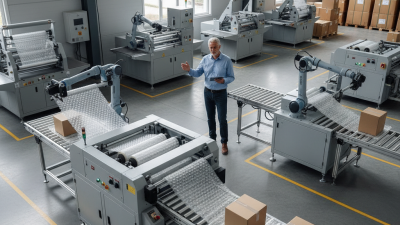
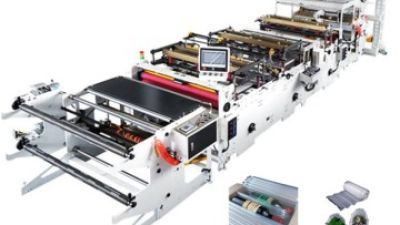
The Semi-Automatic Air Column Film Machine A provides an efficient way for modern businesses to produce protective Packaging Materials on demand. Designed for creating high-quality air column film rolls, it combines reliable performance with practical operation, making it suitable for e-commerce warehouses, packaging suppliers, manufacturers, and companies of different sizes. Its semi-automatic working process helps improve production efficiency while reducing the need for continuous manual handling.
The air column film produced by this machine is soft yet durable, with evenly formed air pockets that absorb impact and provide dependable cushioning. When used to fill empty spaces inside cartons, the film helps limit product movement during transportation and reduces the risk of scratches, crushing, and breakage. It is especially useful for fragile goods such as glass items, electronics, ceramics, cosmetics, and other valuable products that require additional protection during shipping.
Manufactured in China, Machine A is also a flexible investment for businesses with regular packaging demands. Companies can produce large quantities of air column film for internal use, adjust output according to order volume, or supply rolls to other packaging manufacturers and suppliers. Its factory-grade construction and efficient production capabilities support consistent packaging operations while helping businesses manage protective material availability and costs more effectively.
Start with the product, not the machine. Define the desired feeling, dimensions, closure style, and display position.
Record board thickness, color tolerance, foil alignment, embossing depth, glue strength, and acceptable surface marks.
Request trial data using real materials, sizes, coatings, and finishes. Review samples under neutral and angled light.
Automation can reduce handling damage and setup mistakes. Complex controls may slow changeovers without proper operator training.
Modular stations and quick-change tooling support custom sizes, seasonal colors, and shorter production runs. Changeovers still need measurement.
Test stacking, transport vibration, humidity, and repeated opening. Check corners, closures, glue marks, and surface scratches.
Use camera inspection for defects and controlled lighting for color checks. Keep traceable batch records and corrective-action documents.
Ask for material declarations, test reports, recycled-content evidence, and current safety records. Reduce unnecessary layers and measure scrap.
Run a pilot with actual materials. Record defects, energy use, startup waste, and changeover time.
Maximum speed may not mean better production. A slower line can protect quality, although that conclusion needs real cost evidence.
Choosing the right luxury packaging production line begins with clearly defining product requirements, brand presentation goals, target volumes, and desired customer experience. The selection process should consider suitable materials, premium finishes, structural designs, and the complete workflow from prepress and printing to forming, finishing, inspection, and final assembly. Each stage must support the expected appearance, durability, and consistency of the finished package.
A reliable evaluation should compare equipment capabilities, automation levels, customization options, changeover speed, and overall line flexibility. Quality control systems, sustainable material choices, waste reduction, and compliance with applicable regulations are equally important for responsible production. Finally, manufacturers should calculate equipment investment, labor and operating costs, maintenance needs, production efficiency, and realistic capacity. By balancing creative requirements with technical performance and long-term economics, businesses can select a luxury packaging production line that delivers consistent quality, efficient output, and sustainable growth.