Inquiry
Form loading...
0%

Picking out a co-extrusion film machine isn’t just about buying equipment — it’s a big production decision. You really need to find a system that lines up well with your resin types, film structure, output goals, and even the folks running it day-to-day. For example, a machine built for barrier packaging might not work so great if you’re trying to run high-speed stretch wrap film. That kind of mismatch can lead to all kinds of issues — unstable layers, uneven thickness, a lot of scrap trim, and costly downtime that nobody wants.

Dr. Ulrich Reifenhäuser, the Chief Sales Officer at Reifenhäuser, once said, “Sustainability needs to be looked at all along the value chain.” It’s so true. When you're comparing different machines, you should consider energy efficiency, material savings, automation features, and recycling capabilities. Don’t just go on shiny promises — ask your suppliers for real data you can measure. Check out crucial parts like melt pumps, die design, cooling systems, winding controls, and how long it takes to switch over. And don’t forget about the support network — knowing you can count on good service is just as important, especially if some temperature zones start acting up late at night.

Getting hands-on experience is often the best way to discover what really works — and what doesn’t. Just because a die is wider doesn’t automatically mean you’re gonna make more profit. Sometimes, higher production rates shine a light on issues like weak cooling or tension control glitches. There’s no perfect checklist — your film needs might evolve after you’ve got it installed, and what’s perfect today could be limiting down the road. It’s a smart move to chat with experienced operators, run trial tests with your actual materials, and look at sample rolls stored in normal conditions. Companies like Reifenhäuser, Windmöller & Hölscher, and Davis-Standard all have their own engineering approaches, so compare them carefully. Ultimately, the best co-extrusion film machine isn’t necessarily the fastest model out there — it’s the one that keeps delivering stable quality, easy maintenance, and reliable results over the long haul.
How to Choose a Co Extrusion Film Machine?

What Is a Co-Extrusion Film Machine?

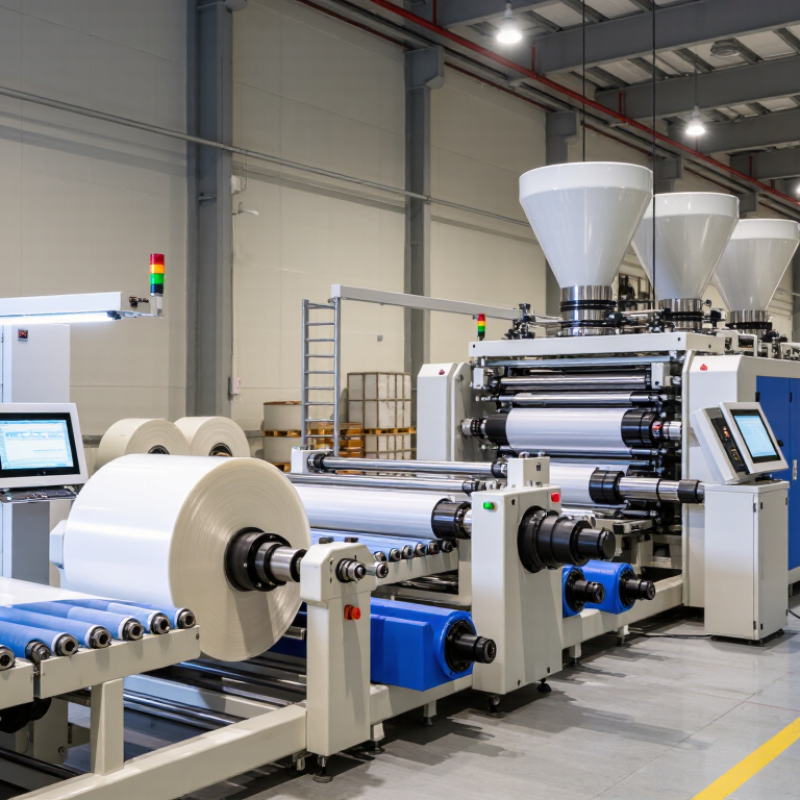
A co-extrusion film machine produces one film from multiple polymer layers. Each extruder melts a different resin, then feeds a shared die. The layers meet while hot but remain functionally separate. This structure can combine strength, sealing performance, stiffness, and barrier protection. In a Bubble Film Machine, the die forms a vertical tube. Air inflates it into a bubble, while cooling rings stabilize the film. A collapsing frame then guides it toward the winder.

Smithers’ report, The Future of Global Flexible Packaging to 2028, values the global flexible Packaging Market at about293.5 billion US dollars in 2023. It forecasts approximately 342.4 billion dollars by 2028. PlasticsEurope reports that packaging represented 39.5% of European plastics demand in 2022. These figures explain why stable multilayer production matters. Small gauge variations can become visible wrinkles, weak seals, or uneven rolls.

When choosing equipment, examine layer control, output, die design, cooling capacity, and automatic thickness measurement. A three-layer line may use a tough outer layer, a barrier core, and a heat-sealing inner layer.

Operators should also check resin compatibility and cleaning time. More layers are not always better. The neatest specification can still disappoint on a humid Tuesday.

I have learned that laboratory results often look cleaner than factory reality. Ask for trial data using your actual resin, target thickness, and winding speed. Not every number survives the factory floor.

How Does a Co-Extrusion Film Machine Work?

How to Choose a Co-Extrusion Film Machine?

A co-extrusion film machine combines two or more plastic layers in one film structure. Each extruder melts a selected resin at a controlled temperature. The melt then moves through a feed block or multi-layer die. Inside the die, separate streams join without fully mixing. This creates a layered film with different properties. One layer may provide strength, while another improves sealing, clarity, or moisture resistance. The cooling ring quickly stabilizes the bubble after the film leaves the die.

Experienced operators monitor melt pressure, temperature, output speed, and bubble shape. Small changes can cause gauge variation or weak edges. The winding system then controls tension and roll hardness. It sounds simple. It is not. Material moisture, uneven cooling, or a dirty die can damage consistency. Regular inspections and documented settings make troubleshooting more reliable.

Tips: Check the intended film structure before choosing equipment. Confirm each extruder supports the required resin range and output. Ask for measurable data, such as thickness tolerance, energy use, and waste rate. A trial run with your actual materials is more useful than a polished sales claim. Keep the die clean. Even a tiny deposit can create visible lines. Also, leave room for future layer changes, because today’s ideal machine may become limiting later. A perfect setup is rare, and operators should review results honestly after every production trial.

Which Film Structure and Materials Do You Need?

Choosing a co-extrusion film machine starts with the package, not the number of layers. Define the product’s moisture, oxygen, aroma, puncture, and sealing requirements. A three-layer PE structure may suit dry snacks or simple liners. A five-layer structure can add PA for toughness, EVOH for oxygen protection, and tie layers for adhesion. Higher complexity is not automatically better.

Keep the material logic clear. The sealant layer usually needs stable heat sealing and low seal-initiation temperature. PA improves puncture resistance but absorbs moisture. EVOH delivers strong oxygen protection, yet humidity can reduce its barrier performance. Recycled content may support sustainability goals, but it can also change melt flow and thickness stability. Small trials matter. Real production is less predictable than a laboratory sheet.

The OECD Global Plastics Outlook reports that global plastic waste reached 353 million tonnes in 2019. UNEP’s 2023 Turning off the Tap report estimates that plastic pollution could fall by 80% by 2040 with system-wide changes. These findings make material efficiency important when designing Packaging Film. Specify gravimetric dosing, independent temperature control, suitable cooling capacity, and inline thickness measurement. Smithers’ flexible packaging market research also identifies barrier performance and resource efficiency as major development priorities. I would not choose a machine from layer count alone. A cheaper structure may waste more material through unstable sealing.

How to Match Machine Specifications to Production Goals?

Choosing a co extrusion film machine starts with your production goals, not the machine’s maximum output. Define the film width, layer structure, thickness range, and target speed. A narrow packaging line needs different specifications from a wide agricultural film line. For Air Pillow Film, check whether the machine supports stable thin-gauge production and consistent air retention. The die should match your width range. The extruder should also handle your planned resin blend without frequent temperature changes.

Tips: Create a simple production sheet before comparing machines. Record kilograms per hour, film width, layer ratios, thickness tolerance, cooling capacity, and winding requirements. During trials, measure the roll edge, surface clarity, and thickness at several points. A large extruder may look efficient, but it can waste material during short runs. Smaller screws may provide better control for flexible production. Ask for verified test data, not only catalog figures.

From practical evaluations, line speed often depends on cooling and winding stability. It is not controlled by the extruder alone. An automatic gauge system can reduce variation, but it cannot correct poor material preparation. Consider changeover time, operator training, spare parts, and cleaning access. These details affect real production costs. I have seen promising specifications fail during humid conditions or frequent color changes. That experience is easy to overlook. Leave capacity room for growth, but avoid paying for unused output. A trial using your actual materials can reveal more than a polished demonstration.

How to Choose a Co Extrusion Film Machine? - How to Match Machine Specifications to Production Goals?

Production Goal Typical Film Structure Recommended Layer Configuration Useful Die Width Typical Film Thickness Indicative Output Range Suitable Screw Diameter Key Specification Priorities
General-purpose Packaging Film PE-based mono or coextruded film 3-layer A/B/A 1,200–2,000 mm 20–120 μm 150–350 kg/h 50–90 mm Stable melt delivery, automatic thickness control, fast material changeover
High-strength stretch film LLDPE-rich stretch film 3-layer A/B/A or 5-layer 1,500–2,500 mm 8–35 μm 200–500 kg/h 60–100 mm Low gauge variation, high-speed winding, precise tension and cooling control
Barrier food packaging PE, adhesive tie layers, and EVOH or PA 5-layer or 7-layer 1,000–2,000 mm 40–180 μm 120–300 kg/h 45–90 mm Accurate layer-ratio control, compatible tie resins, melt filtration, low residence time
Heavy-duty industrial bags HDPE/LLDPE or blended PE film 3-layer or 5-layer 1,800–3,500 mm 80–250 μm 300–700 kg/h 75–120 mm High torque, robust haul-off, strong cooling capacity, durable winding system
Agricultural film LDPE/LLDPE with UV or additive masterbatch 3-layer or 5-layer 2,000–4,500 mm 60–200 μm 250–600 kg/h 65–110 mm Wide-width stability, additive dispersion, bubble control, reliable temperature management
Hygienic liner and clean packaging Virgin PE or certified multilayer PE 3-layer or 5-layer 1,200–2,500 mm 30–150 μm 150–400 kg/h 55–100 mm Sanitary material handling, cleanroom-compatible design, easy cleaning, traceable process data
Recycled-content film Recycled PE combined with virgin sealing or surface layers 3-layer or 5-layer 1,200–2,500 mm 30–180 μm 120–350 kg/h 55–100 mm Strong filtration, degassing, melt-pressure monitoring, flexible formulation control
Small-batch or product-development production PE, PP, biodegradable blends, or specialty polymers 3-layer or 5-layer 600–1,500 mm 20–200 μm 30–150 kg/h 30–65 mm Compact layout, low waste during changeover, modular extruders, recipe-based controls
Selection Note: The output figures are indicative planning ranges for blown-film co-extrusion lines. Actual capacity depends on polymer type, melt temperature, film width, thickness, layer ratio, die design, cooling performance, screw geometry, and operating conditions. Select a machine with approximately 15–25% additional capacity above the target production rate to allow for process variation and future growth.

What Key Features Should You Compare?

When choosing a co-extrusion film machine, compare features by production needs, not brochure claims. Experienced operators inspect layer control, output stability, and material compatibility. A three-layer system may suit packaging, while barrier films often need tighter thickness control. Ask for measured results, not only maximum capacity.

Compare screw diameter, length-to-diameter ratio, and independent temperature zones. These details affect melting, mixing, and energy use. A responsive die should maintain even film thickness across the web. Automatic gauge control can reduce waste, but it needs accurate sensors and regular calibration.

Check cooling ring design, air volume adjustment, and haul-off stability. Small fluctuations become visible as wrinkles or weak seals.

The control system should record pressure, temperature, speed, and alarms. Clear data helps technicians find causes instead of guessing. Safety interlocks, guarded moving parts, and emergency stops deserve direct inspection. Also compare cleaning time, spare-part availability, and access around the die. I have seen low-cost equipment lose value through long changeovers. That mistake is easy to repeat.

Request a material trial with your actual resin blend and target thickness. Review the sample for haze, gauge variation, tensile strength, and seal performance. Do not ignore operator training; a powerful machine still depends on consistent setup.

How to Evaluate Quality, Cost, and Supplier Support?

Choosing a Co Extrusion Film Machine requires more than comparing quotations.

Quality begins with stable layer control, accurate dosing, and consistent cooling. Ask for measured gauge variation, output at your target width, and energy consumption per kilogram. A factory trial should use your resin blend, not a convenient substitute. Numbers expose weak proposals.

The OECD’s Global Plastics Outlook reports 460 million tonnes of plastic production in 2019, with packaging representing about 40% of use.

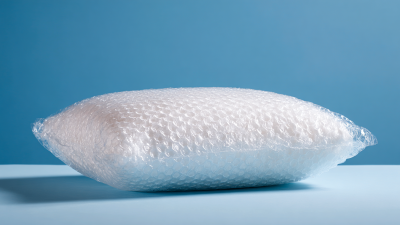
This scale increases pressure to reduce material waste. For Air Bubble Film, inspect bubble uniformity, sealing strength, thickness consistency, and roll hardness. Request samples from a continuous trial. Check the rejected edges, too. A low purchase price can become expensive through trim waste, unstable layers, and frequent operator adjustments.

Cost evaluation should include dies, gravimetric feeders, chillers, electricity, maintenance, training, and spare parts. Ask the supplier to calculate total cost per kilogram over five years. Energy figures must show production speed and resin type. Otherwise, comparisons are misleading.

Supplier support matters just as much. Confirm installation supervision, response times, remote diagnostics, and technician availability. Require clear acceptance criteria before payment. In my experience, attractive promises often become vague after delivery. That is uncomfortable, but worth testing. A supplier that documents troubleshooting steps and keeps critical parts available usually offers stronger operational reliability.

FAQS

What does a co-extrusion film machine do?

It produces one film from several polymer layers. Each extruder melts a different resin. The layers meet inside a shared die. They remain functionally separate.

Why use multiple film layers?

Different layers can provide strength, stiffness, sealing, and barrier protection. A three-layer structure may use tough outer, barrier middle, and sealing inner layers. More layers are not always better.

How does a bubble film line form film?

The die creates a vertical tube. Air inflates the tube into a bubble. Cooling rings stabilize it. A collapsing frame guides the film toward the winder. Small cooling changes can create wrinkles.

Which specifications should buyers define first?

Define film width, layer structure, thickness range, resin type, and target speed. Include thickness tolerance and winding requirements. Maximum output alone means little.

How can buyers test machine performance?

Request a trial using your actual resin and target thickness. Match the planned winding speed. Measure thickness at several points. Inspect roll edges, clarity, bubble uniformity, and roll hardness.

Does a larger extruder always improve production?

Not necessarily. Large extruders may waste material during short runs. Smaller screws can offer better control. Production speed also depends on cooling and winding stability. The catalog number may disappoint.

What costs should be included beyond the purchase price?

Include the die, feeders, chiller, electricity, maintenance, training, and spare parts. Calculate total cost per kilogram over five years. Trim waste and frequent adjustments can become expensive.

What supplier support should be confirmed?

Confirm installation supervision, response times, remote diagnostics, and technician availability. Ask for clear acceptance criteria before payment. Check whether critical spare parts remain available. Promises need documentation.

Can automatic thickness control solve every production problem?

No. It can reduce thickness variation. It cannot fix poor resin preparation, unstable cooling, or incompatible materials. Humidity can still affect factory performance. Test real conditions.

Conclusion

Choosing the right Co-extrusion film machine starts with understanding how it combines multiple polymer layers into one functional film. The machine melts and conveys different materials through separate extruders before bringing them together in a controlled die. This process can create films with improved strength, barrier performance, sealability, flexibility, or visual quality. Before making a decision, define the required film structure, layer ratio, material types, thickness range, width, output, and intended application.

Machine specifications should match both current production needs and future expansion plans. Compare extrusion capacity, die design, automatic thickness control, temperature stability, winding accuracy, energy efficiency, and changeover convenience. It is also important to evaluate the overall cost, including installation, maintenance, spare parts, operator training, and expected operating efficiency. A dependable supplier should provide clear technical documentation, responsive service, quality testing, and practical support throughout the machine’s working life. Balancing performance, flexibility, reliability, and total ownership cost will help you select equipment that delivers consistent film quality and sustainable production results.
Amelia

Amelia

Amelia is a dedicated marketing professional at Hangjia Machinery, specializing in innovative Packaging Solutions for the rapidly expanding e-commerce sector. With a deep understanding of the industry's dynamics, she plays a pivotal role in communicating the advantages of the company’s offerings,......
Previous How to Choose a Poly Mailer Making Machine in 2026